The Christmas season has a way of turning small ad improvements into big revenue jumps. Think of it like a snowball rolling downhill: a little more viewability, a slightly better placement, and suddenly buyers start competing harder for your impressions.
As holiday campaigns ramp up, advertisers flood the market with budgets they’ve saved for the year’s busiest season. More buyers in the auction means more pressure on every impression, and that pressure lifts the value of ads that actually stay on screen. When an ad loads in the right spot and remains in view, it suddenly becomes the star of the page, pulling in stronger eCPMs because buyers are fighting harder for quality, viewable inventory.
This is where layout choices matter more than most people realize. A small shift in placement or format can change how long an ad stays visible, and visibility is the currency buyers are willing to pay a premium for in December.
There’s another quiet boost that comes into play here: how cleanly a buyer can reach your impression. During the holiday rush, demand paths get crowded. That’s why supply path optimization is important. The fewer unnecessary steps between your inventory and the buyer, the more predictable (and often stronger) the auction becomes. In peak season, a cleaner path can turn a good impression into a great one.
How do small layout changes improve ad viewability?
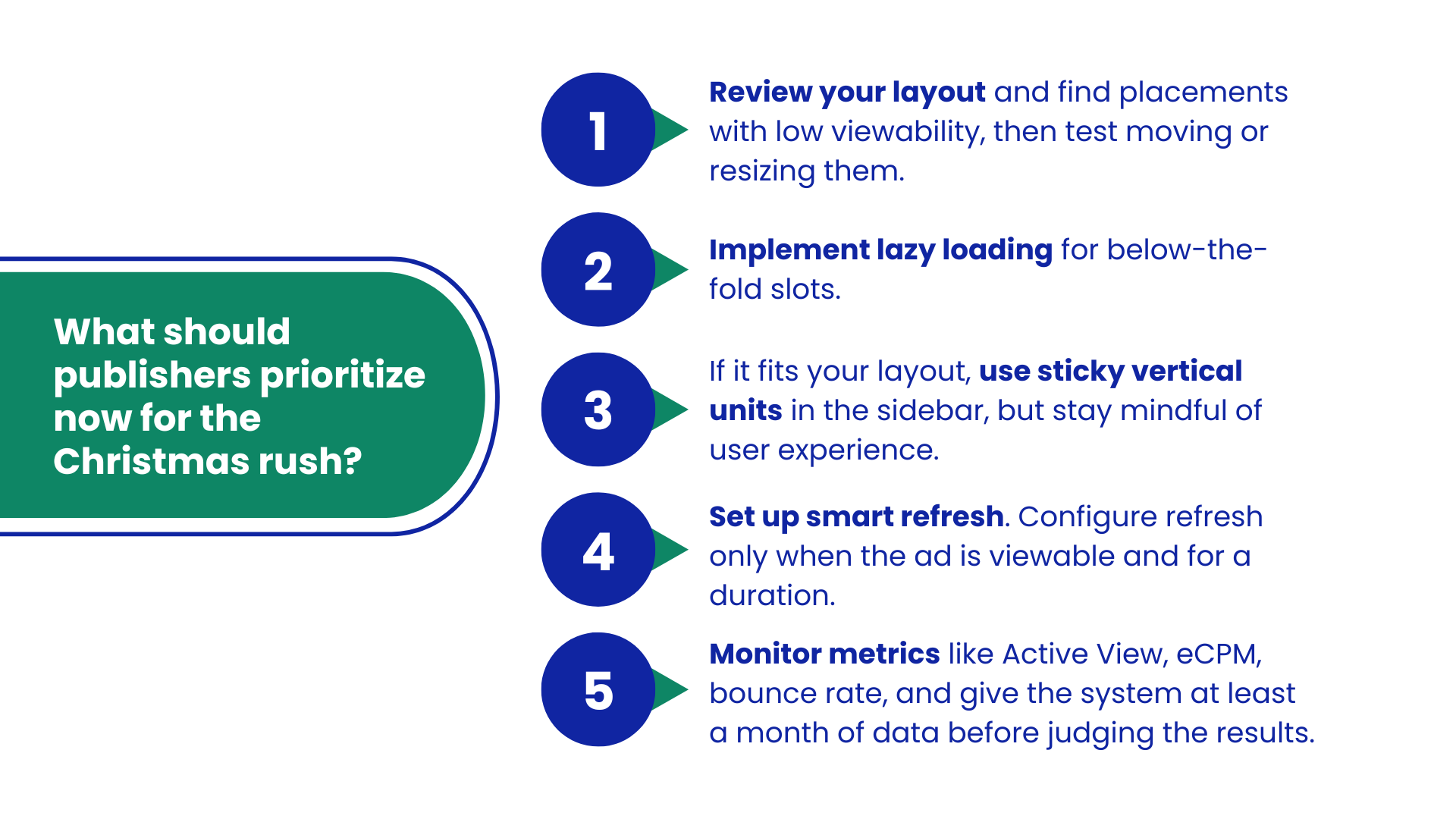
Let’s start with one of the easiest wins: where you place your ad units and what size they are. In practice, publishers see better viewability when an ad sits just below the navigation bar rather than right at the top. Most people scroll past the header quickly, so the ad placed there often never gets a proper chance to load in view.
Another simple tweak is switching to taller, vertical ad formats on desktop, like moving from a 300×250 to a 300×600. Longer units stay on screen for more time as users scroll, which naturally improves viewability.
How does lazy loading help during high-traffic Q4 periods?
Lazy loading is basically your way of saying, “Don’t load the ad yet! Wait until the user is actually close to it.” That matters a lot in Q4 when pages get heavy and traffic spikes. By delaying the ad request until the slot is near the viewport, you avoid wasting impressions on units that were never going to be seen.
It also lightens your initial page load, which helps reduce bounce rates when your holiday traffic is at its peak. Just remember: lazy loading works best for below-the-fold slots. The units at the top should load right away so you don’t lose revenue.
Research shows that when page-load time increases from 1 second to 3 seconds, the probability of a bounce rises by about 32%. Because lazy loading reduces initial load time, it helps keep users on site — improving the chances that ads will be seen and monetized during peak Q4 traffic.
Should I use sticky (fixed) ads? Where and how?
Sticky ads can be very effective when used carefully. A sticky sidebar unit or bottom anchor on mobile stays with the user as they scroll, which naturally gives it more time in view. Pair that with a vertical format like a 300×600, and you usually get strong, steady exposure throughout a long reading session.
The key is to keep the experience clean. The ad shouldn’t cover content or interrupt reading. If it feels natural on the page, it helps both viewability and user comfort.
Can ad refresh (auto-refresh) help increase eCPMs in Q4?
Yes, but only if you refresh intelligently. Refreshing every slot every few seconds doesn’t help. If the ad isn’t in view or refreshes too soon, buyers may start devaluing that inventory, which pulls down eCPM.
The smarter approach is viewability-aware refresh: refresh the ad only when it’s already being seen, or after it has stayed in view for a set amount of time. This aligns well with many auction upgrades publishers already focus on, including waterfall vs header bidding improvements, where the goal is always to serve impressions in the most efficient, highest-value order.
How do these layout optimizations translate into real eCPM uplift?
You’ll usually see the impact within one to three weeks. That delay happens because demand partners use rolling averages to evaluate quality. Once they recognize better viewability, they adjust their bidding patterns.
To track progress, keep an eye on Active View, eCPM, scroll depth, and bounce rate. Together, those metrics tell you whether the improvement is real and consistent.
Are there trade-offs or risks to these tweaks?
Yes, and it’s good to be aware of them.
- User experience: If you push too many high-visibility units or make sticky ads too aggressive, users may get annoyed.
- Page performance: If lazy loading or refresh settings are misconfigured, your page can slow down, which hurts viewability instead of helping it.
- Complexity: These setups also take some technical effort — e.g. using tools like Google Publisher Tags or the Intersection Observer API.
- Measurement lag: And finally, you won’t see the revenue jump overnight. SSPs and bidding systems need a few weeks to adjust to the new patterns.
One small tweak. One big Q4 holiday payoff.
Small layout adjustments — better placement, lazy loading, sticky vertical units, and thoughtful refresh — can make a meaningful difference in Q4. When advertisers push hard during the holiday rush, the impressions that stay in view longest tend to win the highest bids. These tweaks are simple, low-risk ways for publishers to strengthen viewability and capture more of that year-end demand.